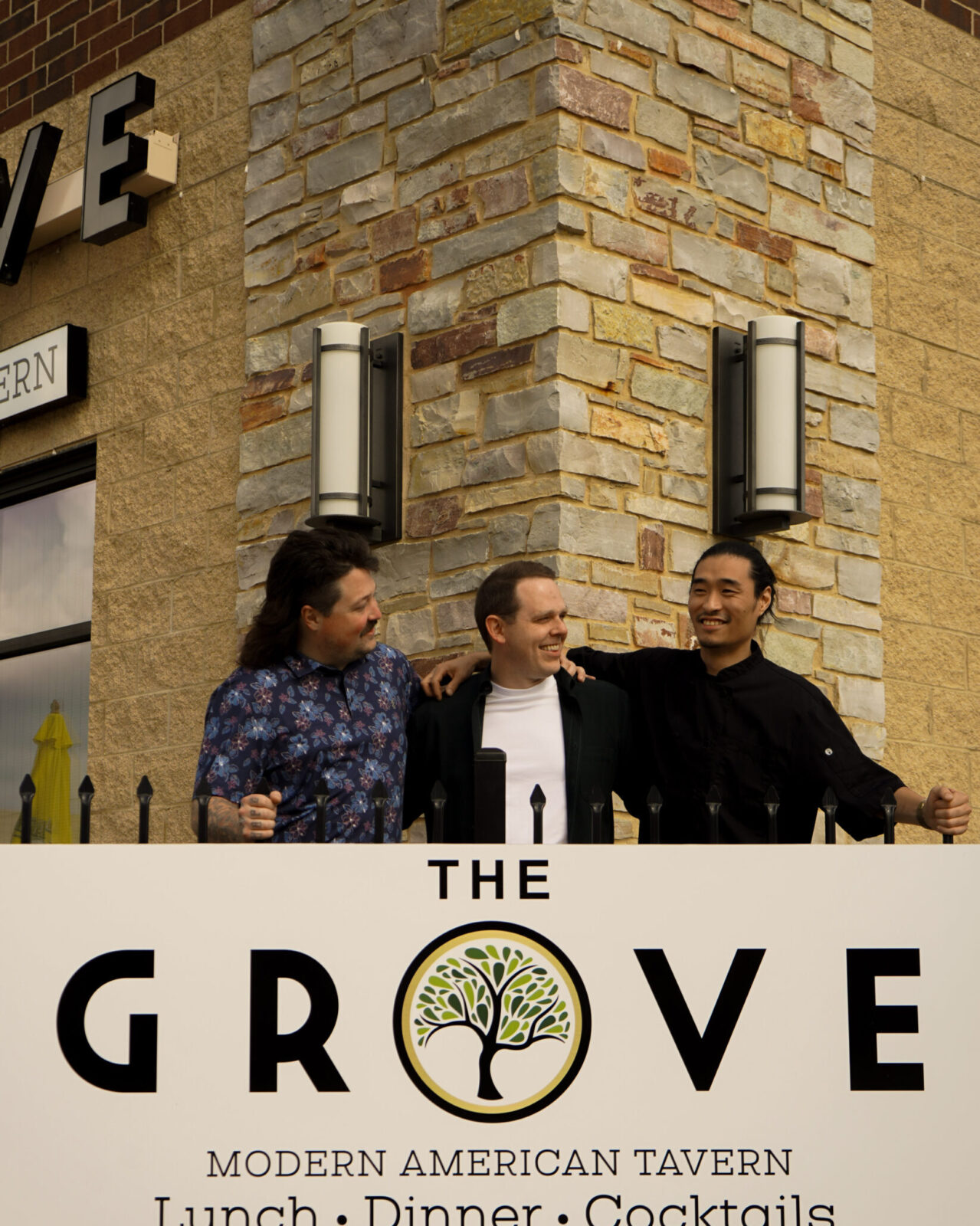
“The rewarding part is, a lot of people saw us grow up here,” said Sam Patterson, co-owner of The Grove. “These people babysat us, were our teachers, saw us graduate from DeKalb High School; especially for the class clowns always goofing off in school the whole time, they’re probably thinking ‘Ok, they really did something here.’”
“That was always my main focus, but I always knew there was something more out there,” he said. “And when you’re good at what you do, it kind of sucks to be making the money for someone else.”
In 2020, Patterson looked at purchasing an already-existing restaurant. When that didn’t come to fruition, he and his team turned their attention to building a small business from the ground up.
“We took this blank space and we did the whole build out ourselves,” Patterson said. “It was a cement floor, that was all we had. No walls, nothing.”
As the dream of The Grove became reality, the team of owners began looking for growth capital to propel them forward.
“Every restaurant is going to need a little extra money,” Patterson said. “Between the build out, payroll, a little debt refinancing, there are a lot of things working against you up front.”
First, the team considered a “traditional” financing route.
“You’d think you’d go right down the street, go to your local bank and they’d be open arms, but it really was not that,” Patterson said. “They wanted us to put a bunch up for collateral, and rates were high, and it just didn’t make sense.”
That’s when The Grove team found NEWITY.
“Good rates, good terms, good amount of money,” Patterson said. “And I was almost shocked at how easy it was. We were organized, so you guys were matching us on the speed at which things could get done.”
Patterson said he doesn’t think that will be the last time he applies for growth capital through NEWITY.
“I think now that we have the chef we’ve always wanted and he’s here for the ride, hopefully we can expand and maybe go East,” Patterson said. “Maybe try a different type of restaurant.”
But despite all their previous success and impending growth, Patterson and the rest of the team at The Grove continue to stay true to the foundation they were built on.
“My family, we didn’t come from money,” Patterson said. “You put in the time, learn as much as you can from other people, and then translate that into doing your own thing.”
When Patterson was asked what his advice to other entrepreneurs would be, he spoke of embracing humility as a foundation for ultimate learning, growth, and achievement.
“Work at a restaurant. Work the back of the house, front of the house, everywhere you can. Get yourself exposed to it,” Patterson said. “Build a base knowledge of the industry you’re looking to get into and have the support around you.”
The Grove’s core team is a hodge-podge mix of finance minds, business-savvy entrepreneurs, and restauranteurs with hands-on industry experience.
This amalgamation of diverse experiences, working in tandem with their commitment to listening to their community, allowed these owners to come together to build something true and lasting.
As 2025 comes to a close, NEWITY is proud to reflect on a year defined by innovation, expansion, and unwavering commitment to small businesses across the nation.
From industry recognition to member milestones, we’re proud of what we’ve built this year.
Our Community Grew Stronger
This year, 322,103 new members joined the NEWITY network, expanding our vibrant community of entrepreneurs and small business owners.
Every new member represents a story of ambition and resilience, and we’re honored to be part of their journey.
Fueling Growth
Why Debt Management Matters
Understanding Your Business Debt
Know Exactly What You Have
1. Leverage Social Media to Spark Holiday Engagement
2. Expand Your Hours
Your SBA 7(a) loan application was preapproved, but not for the amount you had hoped to receive. If you still have your sights set on that higher loan amount, there are steps you can take towards improving your eligibility.
When it comes to increasing your loan size, it’s important to understand what factors play a role in your qualification. Taking strides to make changes to your application can positively impact the amount you’re qualified to receive.
What Factors Determine an SBA 7(a) Loan Amount? Revenue
Credit
Debt…